
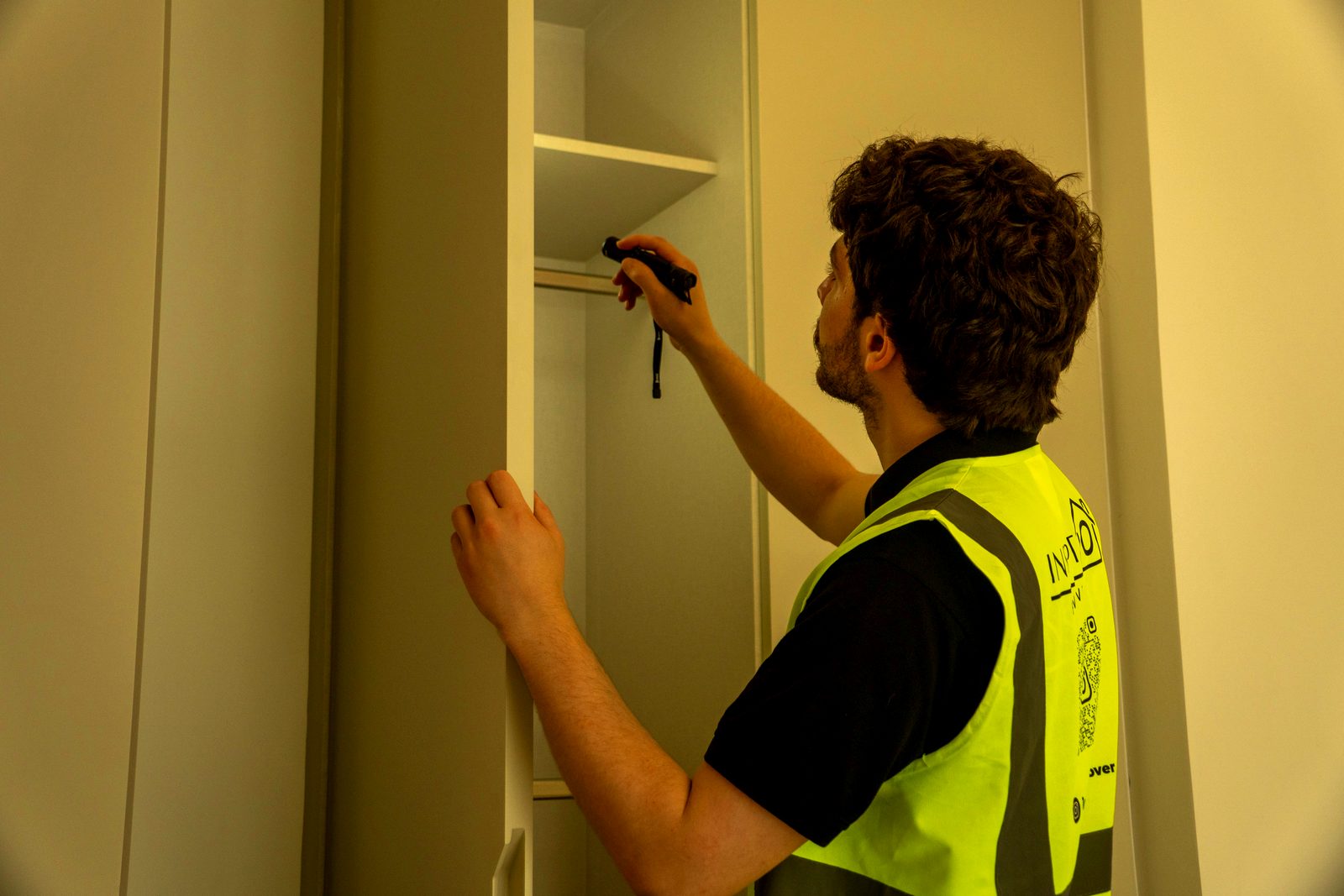
Snagging inspections look at what you can see. Formaldehyde screening measures something you cannot: the concentration of formaldehyde in the air of a newly built or newly fitted-out property.
Formaldehyde is used in the adhesives and resins that bind engineered wood products — MDF, particle board, plywood — which means it is present in kitchen carcasses, wardrobes, built-in joinery, laminate flooring and much of the furniture that arrives with a finished unit. New materials release it into the air, a process called off-gassing, and the rate is higher when materials are new and when temperatures are high. Both conditions describe a newly handed-over Dubai property in summer.
Why it matters more here
- Off-gassing accelerates with heat and humidity, and Dubai supplies both
- Units are often sealed and unoccupied for weeks or months before handover, so nothing ventilates
- New builds arrive with a great deal of engineered wood installed at once
- Air conditioning recirculates rather than replacing air, so concentrations can build
How we measure it
The inspector uses an Extech direct-reading formaldehyde monitor, set up and left to settle in each main area of the property — living room, bedrooms, and the closed spaces that tend to read highest, such as fitted wardrobes and under-sink cabinets. The monitor reads formaldehyde in the air alongside temperature and humidity, both of which affect how quickly materials off-gas.
You get the readings on the day, explained on site, and they go into your report with the rest of the findings. Nothing is sent away and nothing comes back a week later.
What this is, and what it is not
This is an on-site screening, not accredited laboratory analysis. It tells you whether formaldehyde is present in your property and roughly at what level, while the inspector is standing in the room. If a reading comes back high, we will say so plainly and recommend a specialist laboratory test rather than pretend our number settles the matter.
Where readings are elevated, the usual remedy is straightforward and costs nothing: sustained ventilation before occupancy, with wardrobe and cabinet doors left open and the air conditioning set to bring in fresh air rather than recirculate. Knowing whether that is necessary is the point of measuring. Because your inspection already includes a second de-snagging visit, we can take the reading again in the rooms that were highest, so you see a before and after rather than a single number with no context.
We do not offer medical advice, and anyone with a health concern should raise it with a doctor.
Booked alongside an inspection
Most clients add screening to a handover or post-renovation inspection, since the inspector is already on site and the property is at its newest. It can also be booked on its own for a property that has recently had a fit-out, new joinery or new flooring installed.
What a standard inspection covers
Structure & finishes
Walls, ceilings, floors, skirting, paint, tile levels and hollow tiling.
Doors & joinery
Alignment, sealing, locks, handles, wardrobes and built-in cabinetry.
Plumbing
Water pressure, drainage, leaks, traps, heaters, bathroom and kitchen fittings.
Electrical
Sockets, switches, DB board, earthing, lighting circuits and outdoor points.
HVAC
Air flow, temperature differential, condensation, ducting and drainage lines.
Waterproofing
Bathrooms, roofs, terraces, balconies and external wall junctions.
External areas
Landscaping, irrigation, boundary walls, garage, driveway and drainage falls.
Thermal imaging
Hidden leaks, damp behind finishes, missing insulation and overheating electrical points a visual check cannot find.
Questions about this service
Which properties is this worth doing on?
Newly handed-over units, and any property that has recently had a fit-out, new built-in joinery or new flooring. The more new engineered wood in a space, the more there is to measure.
Do other snagging companies in Dubai offer this?
Not that we have seen. Standard snagging inspections are visual and functional. Air quality screening is a separate discipline and we added it because new properties are exactly where it is most relevant.
What happens if the reading is high?
In most cases sustained ventilation before you move in brings levels down, and it costs nothing but time. We give you the reading and tell you what we would do about it. Where a result is high enough to matter, we recommend a specialist laboratory test.
Can I book it without a snagging inspection?
Yes, though most clients combine the two since the inspector is already attending and the property is at its newest.
Ready to book?
Message us with the property type, community and your date, and we will confirm availability and a fixed price the same day.